

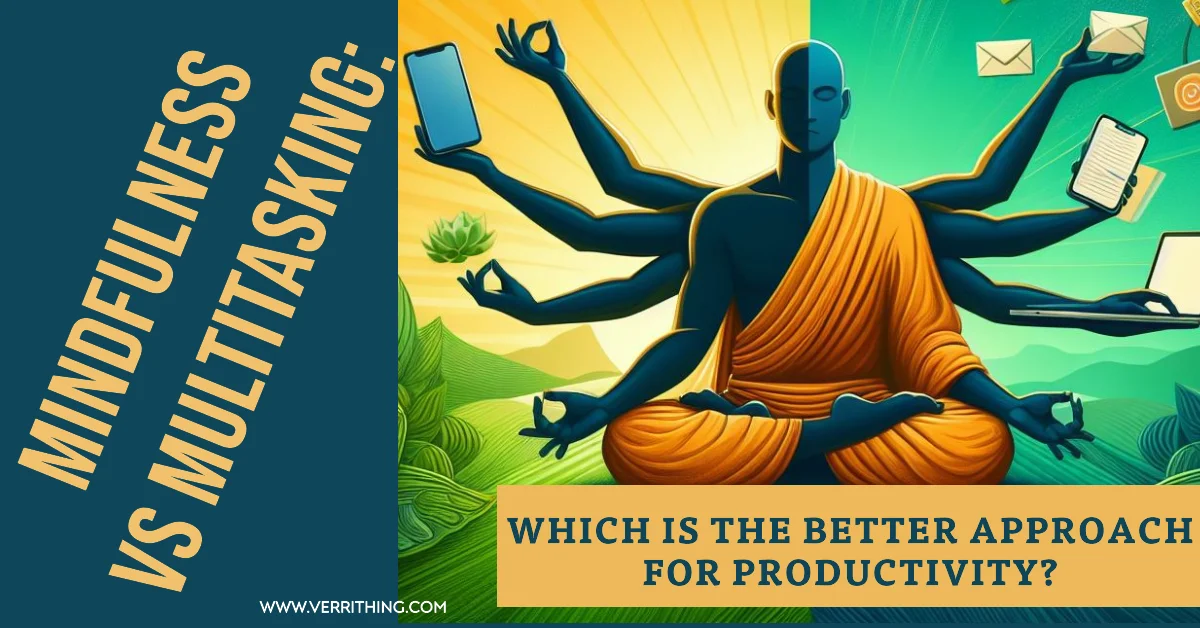
Mindfulness vs Multitasking: Which is the Better Approach for Productivity?
“How did you manage all those customers?” That’s a question I get asked often at my workplace by observant customers. As someone skilled at both multitasking and practicing mindfulness, I’ve found great value in leveraging each approach at the appropriate times. Throughout my workday, there are periods when I need to juggle multiple client needs simultaneously. It’s during these stretches that my multitasking abilities really shine. By deftly switching between different tasks and responsibilities, I’m able to efficiently serve all of my clients’ needs, ensuring everyone walks away satisfied. In fact, I’ve received so many compliments on my capability to handle such a substantial workload with poise.
Yet I’ve also come to appreciate the importance of pure, focused concentration for tasks that require my full mental energy. By practicing mindfulness – being fully present and engaged in the present moment – I’m able to tap into a deeper level of focus and clarity. This enhanced concentration allows me to produce my highest quality work.
In our busy world, being able to do many things at once is important. Many think this is the main way to be productive and efficient. But others think staying fully focused on the now, being fully involved in the moment, also works.
So, what’s better for our health and performance: rapidly shifting focus between tasks or calmly focusing on one thing? Let’s discuss the good and bad points of each.
Why Some People Say Yes to Multitasking
Supporters believe that multitasking helps us do more things in less time. This could make us more effective in our personal and work life. For example, if we can respond to emails while attending a virtual meeting and jotting down a grocery list, we’re essentially killing three birds with one stone, right?
Besides, there are times when multitasking is a must, whether for safety or effectiveness. For instance, a parent must simultaneously keep an eye on their young child while cooking dinner, and a delivery driver might need to navigate unfamiliar streets while communicating with dispatchers.
But Multitasking Isn’t Always Good
It might seem like a timesaver, but studies say multitasking can harm productivity and brain function. Here’s why:
1. It Hurts Your Focus
When we’re juggling many jobs, our mind has to continuously flip between them. This can fracture our focus, which makes it tougher to concentrate fully on a single job.
2. It Leads to More Mistakes and Mistakes
The more things we’re doing at the same time, the bigger the chance we mess something up or miss an important point. Multitasking could result in simple errors, bad decisions, or even serious problems at home or work.
3. It Ups Your Stress
The mental acrobatics needed for multitasking can cause stress and worry, harm our happiness, and lower our output.
4. Forgetfulness
Jumping from one task to another can mess with our short-term memory. It can make it tough to remember important stuff. We might miss key points or find it hard to link related bits of info.
Why Mindfulness is Good
Unlike the rush of doing many things at once, mindfulness tells us to slow down. It wants us to stay in the present and give all our attention to what we’re doing. Here are some cool things about it:
1. Better Focus and Concentration
Mindfulness cuts out distractions and helps us center. It encourages deep, lasting concentration. This can help us understand better, remember more, and perform well.
2. Brain-Boosting Benefits
Research shows that mindfulness can boost our brain’s power. It enhances things like memory, attention span, and problem-solving. This can make us more productive and lead to smarter choices.
3. Less Stress and Worry
Mindfulness helps manage stress and anxiety. By focusing on the here and now, we nurture a calm, clear way of thinking. This improves our overall health and ability to bounce back.
4. More Emotional Smarts
Mindfulness makes us more self-aware and empathetic, both important for emotional intelligence. By understanding our feelings and those of others better, we can create stronger relationships and deal with tough times more effectively.
Finding the Balance
Even though being mindful can provide vital benefits, there are certain instances where multitasking is still useful or give an edge. Essentially, it’s all about finding the right mix, knowing when to split our focus and when it’s optimal to concentrate on a single task.
Here are some tips for finding this balance:
1. Prioritize and Plan
Prior to tackling your chores for the day, reserve a few minutes to set priorities and devise an action plan. Determine which tasks need your exclusive focus, and those that can be done concurrently without risking quality or safety.
2. Combine Related Tasks
Instead of ceaselessly shifting between different tasks, group related tasks. Like, schedule a dedicated block of time for responding to emails, followed by a focused period for writing or analyzing data.
3. Remove Distractions
If a task demands your complete focus, get rid of any interruptions like notifications, social media, or ambient noise. A distraction less zone can assist you to stay attuned and focused.
4. Take Mindful Pauses
While it’s critical to engage deeply when needed, also crucial are regular pauses to relax and avoid mental tiredness. During these pauses, try mindfulness exercises like deep breaths, meditation, or a quick mindful stroll to reboot and re-center your focus.
5. Understand Your Boundaries
We are all unique when it comes to juggling tasks or maintaining concentration. Realistically assess your abilities and tailor your technique. Are tasks getting muddled or errors creeping in? Maybe it’s time to do less at once and opt for a focused, one-task-at-a-time method.
Conclusion
In conclusion, both mindfulness and multitasking have their merits and drawbacks. While multitasking can be a valuable skill in certain situations, the practice of mindfulness with its potential to improve focus, cognitive abilities, and overall well-being should not be overlooked. Find a balanced approach that incorporates focused single-tasking when necessary and strategic multitasking when appropriate, and you will truly unlock your full potential for productivity.